Monday, 1 July 2013

Saturday 29th June - Anglesey

Following the excitement of the Suffolk trip on the 15th June, the following weekend (22nd June) we decided to stay in Staffs and work the local patches. However, we realised that it was finally mid-summer, and we didn't really see anything all day. We decided at the end of the day, that a trip was in order the following weekend.

And so to the 29th June. PJ suggested that Anglesey would be a good destination, as you can always have a fairly decent day here, even in mid-summer. We had a few birds to aim for, with the star attraction being a singing male COMMON ROSEFINCH. Unfortunately, unlike my only other British singing Rosefinch (at Giggleswick, North Yorks on 15th June 2002), this was a brown bird. Nevertheless, a singing Rosefinch whatever the appearance, is a bird you shouldn’t sneer at and dismiss. It's not a bird you see everyday after all.

PJ was unable to join us, but we did welcome back CJW following his recent slightly poorly spell. We paid a quick visit to Westport, then headed off up the M6 and M56, then onto the A55 and the road to North Wales.

As we were driving along, we received news of a ROSEATE TERN on the river in Rhyl. We were only about 20 mins away, and so we reset the sat nav and headed there. We had nothing to lose, it was only a short diversion, and it was one bird that we were hoping to see later on Anglesey.

We parked up by the Marine Lake on a totally deserted car park. We weren’t very optimistic at this point, but we did have five Sandwich Terns fly over our heads. We walked down the River Clwyd and soon found the bridge. There was no actual path underneath the bridge, but we still managed to get under it. On the sandbanks, I counted 140 Sandwich Terns, but on this first scan, I saw no other terns amongst them. I started to scan again, and immediately I found a small tern with a nice rosy breast. Unfortunately, it was a very tired bird (following its flight from…), but it did on occasions lift its head to show us its beak. And whenever a train went past, the whole flock was flushed. There are some very nice photo’s of the Roseate Tern on the North Wales Blog. A good start to the day then, and it meant we wouldn’t have to visit Cemlyn later.

The knackered Roseate Tern in Rhyl.


We drove onto Anglesey and headed straight up to Porth Eilian, the small village by Point Lynas. We parked up and a quick scan of the harbour revealed four Black Guillemots. We drove up to the lighthouse looking for somewhere to park, and had passed one birder standing by the cattle grid looking for the COMMON ROSEFINCH. As we had driven back down from the lighthouse though (having failed to find any spaces), I’d seen a larger group standing in the field. We walked straight up to the larger group. “Any sign?” We asked. “Yes” was the reply, “but its distant and not showing. “Oh, how long ago did it last sing?” I asked. “About a minute ago” was the reply. And sure enough, the Common Rosefinch started singing again, but it was way in the distance.

The party decided to go (I think it was an Alan Davies guided party) and we stood and listened to the distant, still singing Rosefinch. The footpath carried on, and so we followed it. We walked through two fields, but we stopped when the path started to swing away from the Rosefinch. We could hear it singing still, but we thought that it was down in a gully, and therefore we’d no chance of seeing it. Occasionally it appeared to sing louder, and then it suddenly sang very loudly. We looked up and there it was perched on the telegraph wires going over the field in full view. It was an excellent view, and one we thought we’d never have.


Nice crisply focussed shot of the singing Common Rosefinch

The picturesque Porth Eilian - you see twitching is more than just driving 3hrs to see a bird you can see abroad! It's about visiting places, seeing the world, having a good trip out, having something to look forward to at weekends.

Well, we had two out of two so far. We had a quick walk up to Point Lynas to check the area for CHOUGH, but we didn’t see any. That meant we had to drive over to South Stack next. I drove across Anglesey as the other two slept.

As we walked over towards Ellen’s Tower, CJW struck lucky by spotting another year tick – amazingly a Stonechat – unbelievable to think it’s the end of June before we’ve seen one. The cliffs were in full flow, with loads of Guillemot, Razorbill, Fulmar and Kittiwake. We managed to see about five Puffin, plus we were able to show a nice couple some Puffin on the cliff face. We also saw 50+ Manx Shearwater in a flock sitting on the sea just out from the lighthouse, plus Chough were flying along the cliff at regular intervals.

So, all the target birds were seen and by 13:30hrs, we were all done and dusted. Can't be bad!

This was taken at South Stack - a very large concentration of Guillemots on seemingly fairly level rocks - but not their usual type of cliff. Late comers? Failed breeders?

Monday, 17 June 2013

15th June 2013 - Riding on the Bolton to Felixstowe Express

June is normally the quiet summer month, when most birders resort to chasing moths and eating Dragonflies. I like to stick to birding, so it was business as normal. June started with a bang and a trip to Spurn, where a THRUSH NIGHTINGALE had been found late on Friday 31st May. As soon as news broke on the Saturday morning, we headed up there, arriving at about 10:00hrs. The Thrush Nightingale sang twice during the morning, mainly egged on by the Marsh Warbler that was singing away in the next bush.


Several glimpses were had by birders during the time we stood there, but by afternoon all had gone quiet. We realised we would be in for a long wait, pinning our hopes on an evening showing. By 18:00hrs, with the Marsh Warbler still singing we all stood waiting. Unfortunately, despite the best efforts of everyone still present, we only had flight views; and this was all following ten hours stood waiting.

The following Saturday, 8th June, was spent visiting various local sites, seeing various bits and bobs, and missing a few target species. It was forecast for a still, calm night, and so we made a visit to see some Nightjars. An excellent visit saw three or four birds being seen plus a Woodcock made several passes over us.

We started to make our usual plans for Saturday 15th June, but there didn't appear too much around. It finally looked as though spring had ended and summer had finally arrived. Then a singing GREENISH WARBLER turned up in Lancashire and PJ suggested we paid it a visit on the Saturday morning. Afer all, there wasn't anything else around, although a Sedge Warbler was new in to Westport on the 12th June, and a third singing Reed Warbler was also a late arrival this week, suggesting a bit of summer movement was taking place.

We decided to wait for news before setting off for Lancashire (the access had changed as well due to a pre-arranged golf tournament) and the plan was to drive up to Lancs, and then head back to Staffs for the afternoon - PJ declined our offer of joining us in Coot-counting at the gravel pits and so we would head off alone. The day started off at Westport as per usual. We met up with Karl, but most of the visit was spent counting the Canada Geese flock (it makes a dull visit good in the summer!). Then just after 07:30hrs, we received the confirmation that it was still singing away and we set off. PJ insisted this time that he was driving and it was a pleasant experience to be chauffeured. We arrived at Egerton, just north of Bolton just after 09:00hrs, and immediately met up with Brocton Ian, Gladwyn and Tony Jackson. We walked up the bridle way and then found some excellent handmade signs directing us to the viewing area. There was a small crowd present plus a member of the golf course on hand to look after us.


A well organised twitch by the golf club. Nice to see such efforts!

Soon an unfamiliar song started in the wood below us, and we all assumed it was the Greenish Warbler. At first we couldn’t find it, but when it slightly moved along the wood, I suddenly found it in my scope perched on a dead branch. It was then a case of keeping your eye on its favourite perches and then when it started singing we, rather surprisingly, kept relocating it. Views were good if a little distant.


At about 10:00hrs, satisfied with the views we had, we headed back down the M6. There was nothing in the NW to see, so we headed back to Stoke to drop PJ off.

We had only been driving a short time when news came via Birdnet of a PACIFIC SWIFT in Suffolk at 10:40hrs. We carried on heading south only for another message to come on saying it was still present at 10:59hrs. We had expected it to be a fly over sighting like they usually are. PJ asked my opinion on the bird, but I replied that we were technically heading in the right direction for it anyway (on the M6 going south from Bolton!). As we carried on heading for Stoke, the messages kept coming on. Decision time came at J16. We knew it was a 3hr journey to Suffolk, and all three of us were available to go. I made the decision to head along the A50. That way, we would pass home (if it then flew off), or head to Blithfield or Branston along the A50. It was just a case of seeing how far we could travel before it flew off. But the PACIFIC SWIFT didn’t fly off, and we kept heading towards Suffolk. In Cambridgeshire, PJ did make the comment that it would be a wasted journey now if it flew, but we started to think that maybe this bird was twitchable after all. PLo and CS were just a bit further in front of us, but the mesasages from Trimley started getting less frequent. I’d also checked the forecast and I felt we might just make it before a large band of showers moved through the area (but I thought it was going to be a close run thing!).

We arrived in Trimley at 14:50hrs. We already knew there was a parking issue, but we had located a possible area on the map. In the end, the police politely told us where to go and parking wasn’t a problem. We set off for the gruelling three mile walk. It was just the same as walking out to Blakeney Point (Alder Fly style), except this time on a solid path through fields. We passed plenty of smiling happy birders walking back to their cars. At first they told us it was not far to go, then they told us another 15 mins walk. Then they said it was another two miles. We just kept plodding on. As we neared the reserve, one birder told us to start looking overhead, and then the next two told us it was last seen heading our way. Straight away, the heavens opened and we all ran into the nearest hide. There were loads of Swifts in front of us, and we all frantically scanned away. The only problem was that there were 100’s high up in the air over the trees. We started to panic and the dreaded dark thoughts started to appear in our minds.
The rain eased off and to our left we could see birders appearing back on the bank. As we watched them, we suddenly sensed they were watching something. The sight of a birder running towards then made it quite obvious to us. The hide emptied and we were soon standing on the bank. Directions were being mumbled softly from further down the line, but then it transpired they had lost the PACIFIC SWIFT again.

Trimley Marshes, Suffolk
Soon though, it was picked up again in the field at the back, flying over the cows. I scanned and scanned and then I suddenly clapped eyes on it. I shouted out directions, PL was watching it too. PJ was struggling slightly at first due to the fact that he’d left his prescription sunglasses on! We watched the Pacific Swift but the views were only brief as you soon lost it again against the dark background. With the large crowd though it wasn’t long before it was refound. When it fed over the lagoon in front of us the views were pretty amazing. It had started to rain again, and my trousers were starting to cling to me.

Charlie (nearest the camera), Phill L and PJ battling in the rain

With thunder rumbling overhead, I knew this was the second band of showers coming. I looked upstream and you could see the storm racing towards us. We were in for an absolute soaking. We hurtled down the wet, grassy bank (me and pops managed to get down without falling over but…) but the rain was soon hammering down. For virtually all of the three mile hike back it poured down. Then, as we neared the car, the sun was out and the sky was blue.
The gamble had paid off. It was 17:30hrs, we’d a three hours journey back home and we were all drenched – proper Blakeney style all over again. But we had a Pacific Swift on our list now. Get in there!


PJ produced this CGI to commenorate the Suffolk Pacific Swift

On Sunday afternoon we went to visit CJW who has spent the week in hospital. It was good to see him looking a lot better and hopefully he'll be back home again soon. If he hadn't have been in hospital though, the Pacific Swift would surely have left a lasting impression on him as well. A different impression to us though as he was due to be working all weekend! Get well soon Chrissy. We all miss you!

Saturday, 25 May 2013

Clayheads on Tour May 2013 - Two weeks in Turkey

Myself & Mrs PJ spent the holiday based in Ovacik which is located in the hills above the well known resort of Olu Deniz in SW Turkey. We had previously visited the area back in the early 90's but in July so the birding had been hard work which is certainly not the case in May as there were birds everywhere. Walks around the fields, hills & coniferous woodland surrounding the hotel produced Masked Shrikes, which were viewable from the hotel.


Masked Shrike

Kruper's Nuthatches, I must seen at least 20 birds, at various locations around the area, back in 1994 I only saw one!

Krupers Nuthatch

Ruppells Warblers were also easy to find


Other local birds included Syrian Woodpeckers, Short toed Eagles, Olivaceous Warblers, Woodchat Shrikes, Scops Owls, Alpine Swifts, Red-rumped Swallows etc... One morning I had a Levant Sparrowhawk over the hotel which was a bonus.

Syrian Woodpecker

There are also plenty of Tortoises knocking about, these retail at about £250 back home I tell you I could hardly get my case closed when we left !!!


At the abandoned village of Kaya which is just down the road there are breeding Rollers, Rock Nuthatches and Black eared Wheatears.

Roller

Black-eared Wheatear

Rock Nuthatch

The area I had most been looking forward to visiting was Seki which is the mountains about a 90 minute drive from the resort and it certainly didn't disappoint. I got there early morning ( In fact I was up at Nick o'clock ) I parked the car in a promising looking area just before the village and got out to have a scan around - bloody hell !!! the first bird I saw was a cracking male White-throated Robin singing from the top of a bush, then another and another, there was an Isabelline wheatear sat on a rock, Black-headed Buntings singing from the wires a Cretzschmar's Bunting on the wall not to mention all the other usual suspects. A bit further on I found a female Eastern Orphean Warbler and a Rock Bunting and Rock Thrush.

White-throated Robin

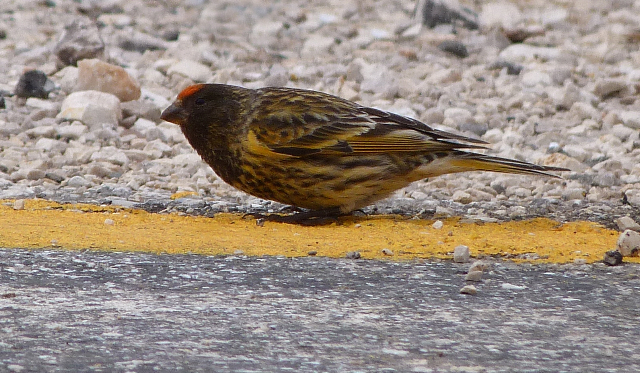
I carried on birding for the next hour or so adding Rock Sparrow, Bee-eaters plus many Nightingales and more WT Robins but the star bird was still missing. I drove higher on the Seki - Elmali road. I must admit I was starting to get a little concerned and was planning a return visit later in the week but just as I reached the very top I flushed a flock of Finches at the side of the road, I quickly turned the car around and drove slowly back to the spot. The birds had started to drop back in, there were Linnets, Goldfinches, Serins and Bird of the Holiday - 10 Red-fronted Serins - fantastic, I got really close to the flock and had brilliant views from the car window I also managed to get a few decent pics I drove back to the coast with a big cheesy grin on my face.


Red-fronted Serins
Some extra photo's -


Black-eared Wheatear

Isabelline Wheatear

Serin

atricapillus Jay


Tuesday, 21 May 2013

Saturday 20th May - Margate Cemetery, Kent

There are two certainties in life. Firstly, if you go to bed early, then you get up early. On the otherhand, if you go to bed late, then you get up late.

I've always been an early riser, and always like to get down to Westport before the heaving masses, and I usually arrive at just after 06:00hrs, even on weekends. Its the only way to chance upon a wader, if one is present, before it gets flushed.

This Saturday, we planned a day in Staffs, hoping that the good spell of birds found during the week would continue. We arranged to meet CJW at Westport at 06:30hrs. I have to admit that I did get up slightly earlier than usual, and at 05:30hrs, I checked my phone for any messages that had come through after I had gone to bed. I was in for quite a shock.


Its not everyday that a  DUSKY THRUSH is found, but one on the mainland, and present for three days was quite a surprise. I briefly did a bit of research behind the story, and tried to phone GAS and CJW to get away as soon as possible. GAS was already up, but it took CJW until 06:05hrs to ring me back. In the meantime, PLo had rang me to say the DUSKY THRUSH was already showing again. I offered him a lift as unfortunately we had a spare seat in the car due to PJ still being in Turkey. I had my second shock of the day when I found out PLo was already in Kent. I realised that some people stay up later than me, and had obviously gone down in the early hours while the rest of the Clayheads were snoozing away!

We managed to leave Stoke at about 06:20hrs, and we had an easy journey down to Kent with no hold ups en route. It was strange to be travelling down with news coming through all the time and not being on site at first light like we normally do. We arrived in Margate (like a poorman's run down Blackpool with a huge set of 1960's high rise flats on the front. Last time I saw flats like these were in Hungary!).

We had a small detour around Margate due to being given the wrong postcode, but we soon found the cemetery and a street full of parked cars. The crowd was easy to find too, but the 1w female Dusky Thrush was sitting deep inside a tree when we arrived, and it took us an eternity to find it in our scope. The boys around us though we very kind in letting us look through their scopes.


It did move occasionally, showing in full view, but then again it disappeared for quite lengthy spells. The problem was that with the crowd surrounding the tree, the Dusky Thrush couldn't drop down to feed. Eventually, we did have some good views, although we were looking through branches again, hence the greenish hue on all the photo's. We also had several Ring-necked Parakeets flying overhead aswell.


1w female Dusky Thrush at Margate Kent. The first twitchable one since 1959.


We were extremely satisfied with how the morning had gone and on the way out we paid a visit to the toilets near the entrance. Now, its not very often that you get a photo of the inside of a toilet on a Clayhead blog, but there's always a first for everything. Way down in deepest darkest Kent, in a toilet block in a cemetery, I found......

.........a toilet manufactured by Twyfords at Cliffe Vale - the old factory is visible from my house! Sorry for the quality of the photo but I wasn't going to flash in there was I.  

Its recently been said that most twitchers just stand and watch one bird and then drive home again. Thats not true on a Clayhead twitch and we always make the most of our day in whatever area we visit. There were a few birds still to see along the North Kent coast. First stop was at Reculver just along the coast. The sun was out now and there were even sunbathers out by the Reculver Towers. We were soon watching a female Montagu's Harrier quartering over one of the fields. There was also a RED-BACKED SHRIKE in the area, but we were told it was a two mile walk, and so we gave it a miss.


The final bird of the day was the Cattle Egret at Shorne Marshes. We soon found Shorne Marshes on the map and armed with our sat nav we set off. All was going well until we arrived at a railway line with a crossing. We parked up, heard a Nightingale singing but then found the gate we needed to walk through had been welded shut! We consulted our maps again, tried and failed to access the RSPB website but eventually decided to try Canal Road which looked as though it also went onto Shorne Marshes. In the end, we walked about two miles along a cycle way and found the Cattle Egret feeding with cattle. As for it being an RSPB site, we didn't see a single RSPB sign anywhere until we got back on the dual carriageway to go home.


Chris enjoyed his day so much in North Kent, I asked him how many ice-creams he'd eaten..


So having seen quite a decent selection of birds in Kent, we headed for home. We'd read a few mumblings on Twitter whilst in the cemetery about the Dusky Thush being a possible hybrid, and it did take a small bit of gloss off the day. Once home, trial by Birdforum started, with various birders casting doubt over the purity of the thrush. You try not to read them or worry about them, but when Martin Garner of Birding Frontiers starts asking questions, then you start sweating. However, during Sunday afternoon, we finally received the news that made us go "Duskytastic"


Monday, 20 May 2013

Early May 2013

May is traditionally an excellent month for birding, and one I particularly look forward to. Its been a hectic month so far, and here is a brief round up.

Its been a better year for Grasshopper Warblers this year.


There was a nice surprise at Westport on the 7th May with this Whooper Swan that dropped in for a short time.


May is always a good month for wader passage in Staffs, and this year its been quite productive so far. On the 11th May, a large passage of Dunlin occured through the county during a very showery afternoon. I managed to find a Sanderling in one flock.

On the 12th May during the duck count at Westport, Karl found a stonking summer plumaged Black-necked Grebe that stayed all day. We knew we were due one soon as we only usually go 2-3 years in between sightings. The last one was in 2011, coincidently also on the 12th May.


The Westport Black-necked Grebe stayed just for the day - like every other Westport record! Pics by Dave Kelsall

A Wood Sandpiper showed well at Doxey from the tin Hide on 13th May.


Another after work dash was made on 15th May. There had been a large passage of waders through the Midlands, and Belvide had had a particularly good day. Star attraction was a summer plumaged Purple Sandpiper, but we also saw four Sanderling, a Black Tern and two Garganey. 

The Purple Sandpiper at Belvide


And to finish a fine week in Staffordshire, a Temminck's Stint was at Branston GP's on the 17th May, meaning another after work trip.


Sunday, 28 April 2013

Late April 2013

I'd only left the county once during April so far, and we had discussed the possibility of going on a trip this weekend. North Wales did seem rather tempting with a SUBALPINE WARBLER and WOODCHAT SHRIKE, but the recent GOLDEN ORIOLE on Anglesey had not been reported recently.

Staffordshire had been quite productive this Spring, but in the last few days, the winds had swung back round to the north and the migrants had dried up somewhat. Highlight of the week though was Mr Graham Mant's excellent finding of Blithfield's second ever Whiskered Tern on Wednesday 24th April. Fortunately due to a late shift, I was able to pop down as soon as news broke, and we enjoyed distant views as the tern fed at the bottom of Blithe Bay.


Whiskered Tern at Blithfield. Photo's by Dave Kelsall

On Saturday we headed over to Spurn for the Rock Thrush, but unfortunately it had done an overnight flit following a two day stay. We did see a few Whimbrel, Grey Plover and a drake Long-tailed Duck and three Little Tern on Beacon Ponds.

We headed up the road to Flamborough Head. Our target bird here was an IBERIAN CHIFFCHAFF, but not just an ordinary IBERIAN CHIFFCHAFF. This was a none singing bird, expertly identified by Birding Frontier's Martin Garner. We parked in the lighthouse carpark and walked round to join the small group that were stood on the pavement outside the coastguard cottages. There had been no sign of the IBE CHIFF for about an hour, and it was rumoured that it did a huge circuit that included the Old Fall hedge. We stood and waited, musing about what an excellent day we'd had when one spotter suddenly pointed at a bush. I also heard a bird calling, and it was different. We were soon watching the Iberian Chiffchaff flit in and out of the willows, calling away. The bird was quite bright, and in some ways had an almost Wood Warbler like appearance, appearing quite bulky and almost white underneath. It certainly was a striking bird. A full report and photo's appear on the Yorkshire Coast nature blog.


We just had time for one more place to visit. And we chose Bempton. Standing on the cliff tops with the north wind still blowing was bracing to say the least. We managed to see a few auks, a few Gannets, Kittiwake, Fulmar and several Puffins flying in.  


Photo's at Bempton - Tree Sparrow and Gannet. Pictures by Phil Jones.


Monday, 22 April 2013

Early April - Migrant chasing

No, the Clayhead blog hasn''t fell by the wayside. I've just been busy. So I will try to put three weeks of birding into one blog.

Spring Migrants
Despite seeing an early LRP on 16th March at Westport, I had to wait until 1st April for my first migrant Chiffchaff, some two weeks later than normal. I then had to wait until a damp day on the 11th April to see Sand Martin, House Martin and Swallow - altogether over the lake at the same time - again, all three nearly two weeks later than normal. Then the flood gates opened with a triple whammy of returning Willow Warbler, Blackcap and Common Sandpiper on the 13th April. But then, the "second wave" of migrants caught up with the first, and on the 16th, I had my earliest ever British Whitethroat (again at Westport). There was a good fall of migrants on Berryhill on the same day, and in the afternoon, CJW, GAS and myself managed to see 12+ Wheatear, a male and a female Redstart and two Whinchat (early again, this was my earliest in Staffordshire). Back to Westport with a returning Sedge Warbler on 17th (my second earliest date ever) and with a good passage of Arctic Terns through the county, I managed to catch up with one at Westport during the afternoon of the 18th (equal earliest ever date).

Arctic Tern at Westport Lake. Picture taken by DK 

Despite dipping three RING OUZELS at Berryhill on the 16th, we had a second chance with two there on the 19th, along with another Whinchat (I've seen three now this year after seeing none last year in Staffs!). And so despite a late start, the recent southerly winds have been quite productive for the summer visitors. 

Winter Migrants
With winter keeping its long, hard grip on the county well into April, a few winter migrants decided to stay. On the 1st April, I saw a juvenile Glaucous Gull in flight at Kingswood over the tip. I was amazed at the number of gulls still present in the area. (a count on 27th March was estimated at 6200 large gulls in the roost). Redwings were also lingering. We had our last sighting at Westport on 14th April, setting a new latest date for me, only for another to be seen on Cannock Chase on the 20th April. Finally, also on the 20th, we saw the Whooper Swan at Blithbury, again, setting a new latest date. Its been a bizarre month. 

Whooper Swan at Blithbury, again by DK
The Best of the Rest
On the 1st April, being Easter Monday, I was allowed out for a few hours. It was still freezing cold if you remember, with the "beast from the east wind" still producing -4C windchill factors. First stop was at Gailey where two Little Gulls had stayed for a few days. The two White-fronted Geese were still present in the fields opposite the entrance, showing well at 09:00 (oops, wrong blog!)

Fantastic photo the 1w Little Gull at Gailey taken by PJ

The Gailey White-fronted Geese

We just had time to pop over to the various gravel pits in the A38 corridor. Highlight was a patch tick for me. I first, I heard it calling, and it sounded quite unfamiliar. Then I found it. You know you've had a good day when you have seen one of these.

Bar-headed Goose! A patch tick for me

I was off work for Easter week, and later in the week we went down to London for a few day. However, before we  went away, I managed to get another quick trip in. We went up to Cheshire to Denhall Quay to see the drake American Wigeon. It had been reported a few times during the day, but when we arrived it wasn't on show. Eventually it came out of the grass and showed distantly.

American Wigeon at Denhall Quay - my entry in the Photo of the Month competition (fingers crossed but I think I've a good chance with this one)

Saturday 6th April started off on the Chase, but for some reason we saw none of the Cannock Chase speciality birds. In fact, we saw not a lot on the Chase. And as it was a Saturday, it was back to the gravel pits for the afternoon. With the pits, you just never know what is going to drop in, or what has. They can be untouched goldmines, or just quiet. Today we spotted a wader. We straight away said Dunlin, but immediately I commented on its size, and its huge beak. I half suggested it was a CURLEW SANDPIPER, but being early April, with one of the longest winters just ending, I knew there was no way it could be one.Anyway, I managed a few shots and video, and then decided that maybe it was one of the northern, longer-billed races of Dunlin. The following weekend, I received a call from another birder saying he had seen a probable adult winter CURLEW SANDPIPER. How strange I thought. I sent the photo's to two eminent local birders who both suggested it was indeed a Curlew Sandpiper.


Video and photograph of an adult w/pl Curlew Sandpiper in Staffs

On further investigation, I discovered that April records of Curlew Sandpipers in Staffs are quite unusual. In fact, our bird was only the 6th April record ever. As for an early April bird, there have only ever been two previous records, way back in 1954 and 1955!

The complete list of records of Curlew Sandpipers in April in Staffordshire is as follows:-
1954 Whittington One on April 9th.
1955 Belvide Resr One on April 2nd.
1958 Chasewater One on April 27th.
1997 Belvide Resr Two on April 26th.
2003 Belvide Resr A s/pl bird on April 27th and 28th.

Onto the next weekend now, the 13th April. We were on our way to the Chase again when we received news of a BEAN GOOSE at Copmere. We headed off to there instead. Unfortunately, by the time we arrived, there was no sign of the reported BEAN GOOSE, but there was a Pink-footed Goose present.

Video grab of the Copmere PFG

And onto the 20th April. Back to the Chase for our third visit of the spring, seeing Tree Pipit and one Redstart singing. Blithfield was fairly quiet following a productive few days there. We saw just two Yellow Wagtails plus seven Common Terns and an Arctic Tern.